Showing posts with label cattle. Show all posts

Wednesday, October 3, 2012

Dairy farmers struggled through drought, now battle armyworms; will suffer without Farm Bill

Dairy farmers will lose up to 10 percent of their monthly income from milk beginning in October because the Milk Income Loss Contract expired when the Farm Bill wasn't renewed on Sept. 30. MILC is a program that provides dairy farmers with payments when the price of producing milk is more than the price for which it's sold. (Oklahoma Farm Report photo)

MILC payouts were cut to 34 percent, from 45 percent, when the Farm Bill expired, Melissa Miller of the Southeast Missourian in Cape Girardeau reports. High feed and gas prices have forced farmers to sell their least productive cows to slaughter, and some small farmers are considering leaving the business. Miller writes that the armyworm is adding to farmers' misery. The pest strips pasture grass, which often replaces expensive feed. Dairy Farmer John Schoen told Miller most farmers are likely losing $10,000 to $15,000 a month.

"Dairy is one of the few commodities that will get hit immediately by this [Farm Bill expiration] because we're on a monthly schedule," Jefferson County Farm Bureau president Michael Kiechle told Ted Booker of the Watertown Daily Times in far upstate New York. "We probably won't get anything now until the crops go in the ground next spring."

Commercial dairy farmers in Maine "depend on subsidies in the [Farm Bill] to help them get through tough times," reports Jay Field of Maine Public Broadcasting. They are selling milk for less than it costs to produce it because of high gas and feed prices. One farmer told Field he will spend $6,000 more on fuel this year, and is barely covering operating costs right now.

Wednesday, September 26, 2012

Inspired by Wendell Berry, successful farmer has remade his family's farm with the future in mind

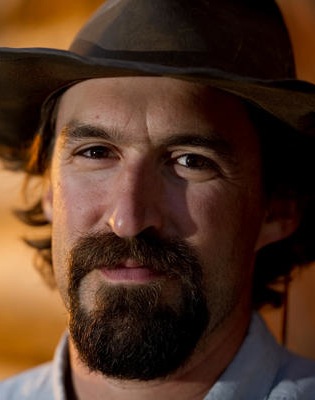
Will Harris III, owner of White Oak Pastures in Bluffton, Ga., may seem like a typical rancher: Stetson hat, gruff voice, beat-up Jeep he uses to drive his more than 1,000 acre farm. But, he "doesn't always sound the part," John Kessler of The Atlanta Journal-Constitution reports. For example, he quotes George Washington Carver on the order of nature, and Michael Pollan on the dangers of industrial agriculture. He's immensely proud of his farm's organic certification and of the new solar panels he's installing. (AJC photo by Brant Sanderlin: Harris inspects chicken)

"Row by row, Harris is breaking the mold on farming in Georgia," Kessler writes. His organic grass-fed cattle are slaughtered in ways approved by animal welfare advocates. Steaks from his farm are sold in Atlanta's finest restaurants, and Whole Foods features White Oak Pastures' beef in its stores. But 15 years ago, Harris' farm was a far cry from organic. The fourth-generation farmer had to reverse decades of damage to the land perpetrated by his father, who "pushed the farm as far as he could, pumping any and all chemicals into the earth and into the animals," Kessler reports.

Harris is a first-generation college graduate, with a degree in animal science from the University of Georgia. But it wasn't a book he read for one of his classes that made him want to change the family farm; it was Kentuckian Wendell Berry's 1977 book, The Unsettling of America, that left a great impression on him. The book "argued agribusiness was destroying the cultural and family context of farming," Kessler writes. Harris said it "made him wonder what kind of system his father had prescribed to, and what kind of legacy he was leaving" to his children. It was the spark that Harris needed to change the direction of his farm. (Read more)

UPDATE: Wendell Berry had this to say about Harris, and farmers like him, in a letter to the Institute for Rural Journalism and Community Issues: "[Harris] represents at a very high level what is going on all over the country: Local citizens, both rural and urban, who have seen something that needed to be done and have simply set about doing it, without official advice or approval or help and without writing a grant application. If the world lasts long enough, these people will find the real solutions to our problems. I think this is the great story unfolding now everywhere in our country, but only occasionally does some journalist notice that it is happening. So far, no politician of consequence has noticed it." 

Tuesday, August 28, 2012

Meat industry video shows cattle slaughter process

The American Meat Institute and noted Colorado State University animal science professor Temple Grandin have released a video depicting and explaining cattle processing at a large, unnamed slaughterhouse, Rita Gabbett of Meatingplace reports.

The video's release coincides with the temporary closure of a California meat plant over human handling concerns, but the Meat Institute's Janet Riley said the video was in production long before. She says in a blog post that Grandin "talks about many aspects of handling and slaughter and she specifically explains that after animals are stunned to make them unconscious prior to slaughter, a step that is required by law, it is normal to see some uncoordinated movement, especially of the unrestrained rear leg. She notes that this does not mean that an animal is conscious, and much research will support this."

The video, narrated by Grandin, "takes the viewer from live cattle being unloaded from the truck through the stunning and slaughter process, and is perhaps a response to recent slaughterhouse videos recorded secretly by animal-rights groups. The video comes with a warning: "We do want to caution viewers that the scenes are graphic at some points. In an effort to provide true transparency, we are shining a light on the complete process." (Read more)

Friday, August 24, 2012

Horse rescue groups overwhelmed as drought-plagued owners give up without access to hay

Horse rescue groups have struggled to care for a growing number of animals abandoned since the recession began in 2008, but leaders say their work has become even more difficult and expensive as drought and wildfires burned up pastures and sent hay prices skyrocketing. Many people who held on to their horses in the downturn are now letting them go because they can't find or afford feed that has more than doubled in price, reports Grant Schulte of the Associated Press. (AP photo by Nati Harnik)

This is what drought looks like to rescue organizations: Jami Salter at the Double R Horse Rescue Ranch in Riverdale, Neb., said she's still getting three or four calls a week from people asking her to take their horses, and at one point, people were abandoning one or two animals a week. "People would just drop horses off without asking me," Salter said. "Every morning, I went out to water them, and I'd have more horses than the day before."

Most farmers and ranchers have had trouble growing hay this year because of the drought that stretches from Ohio west to California, reports Schulte. Salter said a company that donates to her rescue got 46 bales last year from a 22-acre plot but this year expects only six or seven.  "There's no place to go with a horse you can't feed," said Iowa Horse Council President Bill Paynter, of New Virginia, Iowa. And, say advocates, it's only going to get worse.

(See also a Financial Times story on hay a as key U.S. commodity here. The viewing is free but readers must register to be allowed onto the site.)

Thursday, August 23, 2012

Ranchers continue struggle to feed herds, deal with severe drought in different ways

This summer's oppressive drought has crippled the Midwest. Crops have died in fields, stretches of the Mississippi River are at reached near record lows. It's all having an impact on the price of meat, dairy, corn and hay, and cattle producers have been struggling to feed and water their herds.  National Public Radio's Neal Conan spoke with some of them, and an agricultural economist.

Conan reports that many cattle farmers "have to decide how many animals to keep, how many to sell, how much food to preserve, what to do if conditions get worse and whether to stay in the business at all." Fifth-generation rancher Zack Jones of Haralson, Mont., told Conan that grass on his ranch is all turning gray or white, water is scarce and the air has become hazy with smoke from prairie or forest fires. He said he's practicing holistic management as a way to manage the land in a sustainable way. Through this method, cattle are allowed to graze on a patch of land, then moved to another before they eat the grass beyond the point of replenishment. Jones told Conan most ranchers don't practice holistic management, but it has worked for his family for generations.

Colorado State University professor Norman Dalsted told Conan drought has been a plague on the High Plains for at least two to three years, and this year's has intensified the consequences for ranchers. Most of those he knows are trying to "secure feed sources," he said, and some are even considering moving herds to winter in areas less affected by drought.

An Oklahoma rancher only identified as Tom told Conan that as the zwater levels drop, there's less water for cattle, and ranchers have invested their careers in building their herds. "It's something that can't be replaced overnight," he said, adding that most ranchers are aging and likely won't be willing to put 10 to 20 years into rebuilding a herd. (Read more)

Tuesday, August 21, 2012

Drought increases hay prices, making it even more difficult for livestock producers to feed herds

The price of bales of hay has more than doubled this year, with average prices reaching record levels. The price increase has made hay a major commodity in drought-stressed areas of the U.S., "far out-pacing the rally in corn and soybeans prices," Gregory Meyer of the Financial Times reports. The increase is also putting more stress on ranchers who are struggling to feed their herds.

Hay supplies per animal are at the lowest level in more than 25 years, Department of Agriculture economists told Meyer. This will increase meat and dairy prices as ranchers shrink herds because they can't afford to feed them. Ranchers would typically be grazing cattle now and mowing hay supplies for winter, but corn-price increases and poor pasture conditions are forcing many to use existing hay stores. The U.S. faces its smallest hay harvest since 1976, Meyer reports.

The rise of hay prices has been "largely unnoticed outside the cattle industry," but its price increase is significant, Meyer reports. At an auction in Iowa last week, hay sold for $300 per short ton, a 150 percent increase from last August. In Missouri, prices rose by 70 percent, according to the Agricultural Marketing Service. Hay has been delivered to Iowa from as far as Manitoba, Canada. (Read more)

Friday, August 17, 2012

Corn farmers, meat producers and biofuel makers argue over ethanol quota amid drought

A Kansas ethanol plant reecieves corn.
(NYT photo by Steve Hebert)
Three big agribusiness interests -- corn farmers, meat producers, and biofuel refineries -- are in a political fight to protect their interests amid the ravaging drought. At issue, reports John H. Cushman Jr. of The New York Times, "is whether to suspend a five-year-old federal mandate requiring more ethanol in gasoline each year, a policy that has diverted almost half of the domestic corn supply from animal feedlots to ethanol refineries, driven up corn prices and plantings and created a desperate competition for corn as drought grips the nation’s farm belt."

Meat producers, writes Cushman, "are demanding that the Obama administration waive the ethanol quota to ease rising feed prices. But ethanol producers worry that the loss of the quota will undermine the ethanol industry and do little for corn farmers but drive down the price of their stunted harvest. The meat industry, backed by several governors, lawmakers and even international food agencies, argues that the quota has distorted grain markets by sucking up corn when ranchers can least afford it. But the ethanol industry says that its corn consumption is down 12 percent since the start of the summer and that weekly ethanol production is at a two-year low. As corn prices have risen, refineries have scaled back production, idled dozens of plants and sold ethanol inventories. As a result, the industry may consume 10 percent less of this summer’s crop than last year’s, government and industry officials said." (Read more)

Monday, August 13, 2012

Week's start on drought news: Wells dry up, crop insurance helps, pot shrivels, some areas gain

A cornfield in Bloomsdale, Mo., where wells
wells are going dry. (St. Louis Post-Dispatch)
"Everyone, most everything, needs water," Rick Montgomery of The Kansas City Star wrote Sunday in the first installement of his three-part series, "Chasing the Drought." "We just can’t always expect it to be there, not as the world’s population grows and its moisture content stays the same."

So begins the week's reporting on what is fast becoming the topic none of us can escape.

“This year’s drought is a great opportunity to look at the plans in place and better prepare for the next drought,” Michael Hayes, executive director of the National Drought Mitigation Center at the University of Nebraska told Montgomery. The reporter has traveled through seven Midwest states and "met with farmers, beef producers, worried weather experts, park managers and policy wonks" to find out how each would try to avert some of this pain down the road, if it can be averted. (More here)

Abandoned Main Street in post-irrigation
Happy, Texas (Scott Tong photo)
How much impact? Today, 36 states are projecting water shortages next year. For regulators, it's hard to limit the use of the essential resources, especially in states like Texas, where groundwater is part of your private property. American Public Radio's Marketplace visited Happy, Tex., a small town in the Panhandle that knows what it's like to run out of water. (Read more)

You can add residential water wells to the list of casualties claimed by the Drought of 2012, reports the St. Louis Post-Dispatch. "For months, farmers have been forced to drill deeper wells to water parched crops and feed livestock. But in recent weeks, homeowners across the state have reported that they can't perform basic tasks such as doing laundry or washing dishes, let alone even think about watering their flower beds. It's a difficult problem to quantify, because most private wells go unmonitored."

While the government has slashed its estimate of the soybean yield, made only a month ago, to the lowest level since 2003 and its estimate of the corn yield to the lowest level since 1995, Agriculture Secretary Tom Vilsack says 85 percent of farmers are covered by crop insurance, The New York Times reports.

It's safe to bet that these farmers aren't covered: Lauren Pack of the Dayton Daily News and John Caniglia of The Cleveland Plain Dealer report that the state's marijuana crop has suffered horribly in the drought. "The potent plant that thrives in fields and wooded acres across Ohio has suffered through an unusually brutal summer," he writes. In many places, plants are a fraction of the 4- or 5-foot height that is normal for this point of the growing season. Give it time; it's a weed, remember? (Photo from KEVO-TV, Brownsville, Tex., with story by Tina McGarry)

Of course, the drought is good news for farmers in places where it is absent, because it has driven up prices, but those effects can be broader and indirect, in areas where grains are not major crops. In western North Carolina, award-winning editor Jonathan Austin of the Yancey County News found a way to make the national story local in a region that is getting plenty of rain: "Some area farmers may want to consider taking a chance by buying some of the cattle flooding the market in the Midwest. The impact of the drought on food prices could also lead more residents to begin shopping locally," according to North Carolina State University's Arnold Oltman, a professor of agriculture and resource economy. Austin also reports the region's "availability of water may prove to be an economic boon to microfarmers, beef growers and others who look to the land for at least some of their income." (Read more)

Crop scientists are breeding – and farmers are raising – plants and animals more tolerant of drought

Texas rancher Ron Gill puts out cottonseed
feed for cattle bred for heat. (AP photo)
Across American agriculture, farmers and crop scientists have concluded that it’s too late to fight climate change, writes David Pitt of The Associated Press. They are responding with a new generation of hardier animals and plants specially engineered to survive, and even thrive, in intense heat with less rain. Cattle, Pitt reports, "are being bred with genes from their African cousins who are accustomed to hot weather. New corn varieties are emerging with larger roots for gathering water in a drought. Someday, the plants may even be able to "resurrect" themselves after a long dry spell, recovering quickly when rain returns."

"The single largest limitation for agriculture worldwide is drought," said Andrew Wood, a professor of plant physiology and molecular biology at Southern Illinois University. Kansas farmer Clay Scott is testing a new kind of corn called Droughtguard as his region suffers through a second consecutive growing season with painfully scarce precipitation.

The urgency also is evident in Texas, where rainfall has been below normal since 1996. Crops and pastures were decimated in 2011 by a searing drought, and some got hit again this year. Ranchers have sold off many animals they couldn’t graze or afford to feed. Cattle inventory, at 97.8 million head as of July 1, is the smallest since the U.S. Department of Agriculture began a July count in 1973. At least one rancher is now breeding cattle with genes that trace to animals from Africa and India, where their ancestors developed natural tolerance to heat and drought. (Read more)

Monday, August 6, 2012

Being deep-fried at a fair takes on new meaning in drought and heat wave

In much of rural America, it's that most wonderful time of year -- fair season. A time when country life is on proud display, where generations of farm families gather and deep-fried foods seem guiltless. But at many county and state fairs this year, the most widespread drought since the 1950s is also evident, reports Monica Davey of The New York Times. (Keeping cool at the Ozaukee County Fair in Wisconsin was a full-time job; NYT photo by Darren Hauck)

“You see the stress of this all on individuals everywhere you go, even the fair,” said Vivian Hallett, who most years has entries (and winners) in nearly every imaginable plant category at the Coles County Fair in Illinois. Not this year. “We just didn’t have the stuff,” said Hallett, 65. “All our pumpkins have died. Zucchinis? Dead. Our green beans are just sitting there turning rubbery. And my gladiolas never came up at all.”

Bad, yes, but human attendance has shriveled, to -- the combination, organizers say, of miserably hot weather and larger, overwhelming concerns back home on the farms. “It was the roughest I’ve seen,” said Gary Shemanski, facilities manager at the Johnson County Fair in Iowa. There, he told Davey, attendance fell, four rabbits perished in heat that exceeded 100 degrees, and a beloved, final fireworks display was canceled for fear of setting off a blaze in the bone-dry county.

Why go at all? Because, organizers say, rural families may need a distraction more than ever. “The fair is just in your blood — you don’t think about it, you just go,” said Jean Klug, 63, of Cedarburg, Iowa. “It’s just country living,” said Bob Hartwig, who added that his children had intended to bring five cows to Wisconsin's Ozaukee County Fair but downsized to three just as his family was weighing downsizing a larger herd at home. Fair organizers say they are bracing for the possibility of still more fallout next year, writes Davey, when raising an extra pig for a fair may become an impossible luxury. “They may decide feed prices are just too high the next time,” said Brian Bolan, agriculture director for the Wisconsin State Fair.  (Read more)

Saturday, August 4, 2012

Drought one of worst in history, but not necessarily economic disaster, Kansas City Fed bankers write

"Severe drought has ruined one of the most promising harvests in U.S. history," but a weather disaster doesn't mean economic disaster, Federal Reserve Bank of Kansas City Vice President Jason Henderson and economist Nathan Kauffman write in the latest edition of the bank's quarterly publication, The Main Street Economist.

Though the U.S. Department of Agriculture recently cut estimates of the corn crop by 12 percent and the soybean crop by 8 percent, but "USDA’s price and yield projections suggest that U.S. corn revenues could rise 12 percent above June estimates and approach last year’s record highs." (Chart based on data from Commodity Research Bureau.) "Similarly, total soybean revenues are now projected to increase 3 percent above June 2012 estimates. A similar revenue pattern emerged during the 1988 drought. Still, final revenue estimates for 2012 will hinge on future weather patterns, final production losses and price responses to harvest expectations."

Individual farmers' situations depend on their crop choices, marketing strategies, the weather and crop insurance, the report says, but livestock producers are worse off: "Estimates suggest that over 70 percent of all beef cows are in states with pasture conditions rated as poor to very poor. With two-thirds of U.S. hay production areas experiencing drought, alfalfa prices have jumped 15 percent since May. In an attempt to limit losses, ranchers weaned calves earlier than usual and increased the placement of feeder cattle into feedlots. Combined with the increased shipments of feeder cattle from Mexico, the influx of cattle into feedlots contributed to a 12 percent decline in feeder cattle prices since mid-June. . . . USDA expects feedlot operations to lose more than $200 per head this fall. . . . Hog and poultry enterprises are also bracing against rising feed costs and falling profits." But if short-term losses reduce livestock head count, prices are expected to rebound.

Henderson is the bank's vice president and Omaha branch executive. Kauffman is an economist. Their report also addresses the drought's effect on transportation, meatpacking, ethanol, food prices and all consumer prices. To read it, click here.

Thursday, August 2, 2012

House passes drought-aid bill, as outlook for overall Farm Bill remains unclear

The House passed a disaster aid package today to help cattle and sheep ranchers who are running out of pasture and up against high feed prices. The vote was 223-197. While the $383 million measure "promises some political cover for Republican candidates in farm states," reports David Rogers of Politico, the standoff over the five-year Farm Bill "remains a serious liability for the GOP going into November’s elections."

The current Farm Bill expires at the end of September, when Congress is likely to recess for campaigning. Congress has relatively little time to legislate before that, because it is starting a recess that will run through Labor Day. The chairmen of the House and Senate agriculture committees were scheduled to meet tonight "to begin negotiations toward a potential compromise that could be called up in September if the political winds shift enough in favor of action," Rogers writes.

More than half of U.S. counties have been declared disaster areas, 90 percent due to drought

More than half of U.S. counties are now disaster areas, 90 percent because of the ongoing drought that has been brutalizing the nation. That brings this year's total to 1,584 counties in 32 states, reports Michael Muskal of the Los Angeles Times. The latest disaster designations, made Wednesday by Agriculture Secretary Tom Vilsack, were in Arkansas, Georgia, Iowa, Illinois, Indiana, Kansas, Mississippi, Nebraska, Oklahoma, South Dakota, Tennessee and Wyoming. (Hays Daily News photo by Steve Hausler)

Vilsack also announced that the federal government will be concentrating on helping beleaguered farmers and ranchers by opening up approximately 3.8 million acres of conservation land for grazing and haying. Further, he said, crop insurance companies have agreed to provide a grace period for farmers who need more time to pay insurance premiums. Muskal reports that farmers will have an extra 30 days to make their payments without having to pay a penalty.

Here's the drought map issued this morning. Click on the image for a larger version.

Tuesday, July 31, 2012

'Green ranchers' could redefine their trade

"A new breed of cowboy ... is changing how ranching is being done in the American West and might -- just might -- alter the dynamic in the 'range wars' that have engulfed the region for more than half a century," Todd Wilkinson of The Christian Science Monitor reports. The "green cowboys" are not "new arrivals carrying out green techniques for the feel-good sake of being green," though. They are real ranchers managing their land in "benevolent and environmentally sensitive ways because they think it will help them survive -- and make money," Wilkinson reports.

Rural Landscape Institute director Bill Bryan told Wilkinson that the old way of ranching is "giving way to a new paradigm," one that says raising animals to eat doesn't have to be at odds with protecting the environment. Wilkinson reports some of the biggest landowners in the West, including Ted Turner and John Malone, who own a combined 4.3 million acres, are embracing aspects of this paradigm. The "sustainable ranching movement" now has members in every Western state, Wilkinson reports.

Zachary Jones, right, manager and rancher of Twodot Land and Livestock Co., gave one example of his departure from the old ways of ranching: Rather than allowing cattle to graze on pastures unattended until vegetation is nearly gone, which can lead to greater dependence on expensive hay, antibiotics and pesticides, Jones fences his cattle into smaller areas with portable electric fences and only allows the cows to chews grass to a certain height, then shifts them to another areas.

While it may seem like just a fad connected to the overall "green movement," Wilkinson reports sustainable ranching "has been practiced in the region since the conquistadors." As Jones told Wilkinson: "Being a smart rancher – one who's still going to be here in another 50 years ... comes down to how you treat the land and build resilience over time that matters. In particular, it's about how well you manage grass and water." (Read more)

Thursday, July 26, 2012

Corporate livestock farm takeover making competition disappear in meat marketplace

Over the past 50 years, the number of U.S. has declined by more than a million, but more animals than ever are being raised, slaughtered, and processed. The very largest of the farms on which these animals are raised now account for a huge proportion of production.

Indeed, since 1980, the percentage of the market held by the four largest farm corporations has steadily risen so that today, 85 percent of beef, 65 percent of pork and 51 percent of chicken is in their hands, according to the Pew Environment Group report. That, of course, means that small farmers are responsible for a dwindling percentage of the nation's meat. (Pew photo)

The Pew report concludes that the wholesale corporate farm takeover is resulting is "the disappearance of open and competitive livestock markets." In turn, this transformation in livestock agriculture "has led to concerns about the economic leverage that large corporations hold over independent farmers and ranchers," the reports notes. So much so that "early in 2010, the USDA and the Department of Justice initiated an unprecedented series of joint public workshops around the country to investigate the state of competition in agriculture markets. Hundreds of independent livestock producers attended the workshops, and many testified that it is increasingly difficult to survive economically. They urged the USDA’s Grain Inspection, Packers and Stockyards Administration (GIPSA) to better regulate the anti-competitive practices of large agribusiness."

In 2010, the GIPSA proposed rules, as required by the 2008 Farm Bill, intended to protect independent farmers and help reduce the power of consolidated meatpackers. In August 2010, a bipartisan letter from 21 senators to Agriculture Secretary Tom Vilsack urged speedy adoption of these regulations, but the final rule, released in December 2011, contained only a few of the needed reforms. Some members of Congress are asking for further rescission of some of these intended protections. (Read more)

Friday, July 13, 2012

Why hay spontaneously combusts (It's moisture!) and how to prevent the tragedy of a barn fire

The good folks behind the Horse & Man blog are spreading the word about spontaneous hay combustion, which is very real and has been known to burn down barns and kill the animals sheltered within. The key to the fire hazard is, surprisingly, moisture. According to Lester Vough, a forage crop extension specialist at the University of Maryland, hay that is "too wet from rain or dew or that was not allowed to dry sufficiently in the field will go through a curing process (sometimes referred to as a sweat) in storage. During the curing process, heat is produced. This heat buildup is caused from live plant tissue respiration coupled with bacteria and mold activity." (Horse & Man photo)

Vough, who reports a more complete description of bacterial interaction and temperature ranges to look out for here, suggests that most problems with spontaneous combustion begin occurring within two weeks after hay has been stored, and combustion is possible for as long as two months after hay has been put up. Temperatures to watch for -- with a proper hay thermometer, experts note -- begin at about 150 degrees. Those temps should be taken in a new batch of hay, especially if has rained recently and the hay is newly baled. When stacking hay in the bay, also allow for good air flow. The same advice applies to the barn in general: Allow good air flow through the loft when possible, so no moisture can grow into a fire. (Read more)

Tuesday, July 3, 2012

Cattle industry 'like a bottle,' with many farmers on the calf end, and 4 companies packing 82% of beef

"In the chicken and pork industries, nearly every aspect of the animals' raising has long been controlled by just a handful of agriculture conglomerates. But the cattle industry is still populated by mom-and-pop operations, at least at the calf-raising level," reports Peggy Lowe for National Public Radio. There are about 750,000 farmers and ranchers who have a "cow-calf operation," which average 40 head of cattle per farmer.

The small numbers of the cattle industry end there, Lowe reports: "In simple terms, the business is bottle-shaped — large at the bottom and narrowing to the neck, where just four companies control the majority of the market." Thus, even though there are many small cattle farms, they have the least amount of control over their industry.

The process generally works like this: Small producers raise calves until they're weaned and weigh about 600 pounds, they they sell them to a "backgrounder," a larger operation that buys calves in groups, transitions them to feeding and fattens them up. They gain about 800 pounds there, get immunizations and prepare for the feedlot, where they will be penned and fed three times a day in a "finishing" process. Here's where the industry bottlenecks. The Department of Agriculture reports that the top 25 feedlots control 47 percent of the market.

And her's where it really gets narrow: Most cattle are sold to just four companies: Tyson Foods, Cargill, National Beef Packaging Co. and JBS. These four deliver 82 percent of the beef on the market. Many ranchers fear the industry will soon be completely controlled by a handful of companies, and statistics tend to support this claim. In the last 20 years, the number of ranchers raising cattle has dropped more then 20 percent, according to the USDA. (Read more)

Monday, June 25, 2012

Floridians worry about their springs, as algae bloom and cattle operation seeks 13 million gallons a day

Florida's freshwater springs and rivers, especially those in the central and northern parts of the state, have seen a sharp drop-off in flows and a steady rise in algae over the last decade, reports Lizette Alvarez of The New York Times. The declines have alarmed Florida environmentalists, spurring them to launch a broad campaign to bring attention to the problem and spur Gov. Rick Scott to act. Scott's office received a letter last week but has yet to respond. (Photo by Sarah Beth Glicksteen)

The culprits, according to environmentalists, "are a recent drought in north-central Florida and decades of pumping groundwater out of the aquifer to meet the demands of Florida’s population boom, its sprinklers and its agricultural industry," Alvarez writes. "To what degree the overconsumption of groundwater is to blame for the changes is being batted back and forth between environmentalists and the state’s water keepers. But, for the first time, a state with so much rain — the vast majority of it uncaptured — is beginning to seriously fret about water."

Bob Graham, a former Democratic governor and senator who assembled the Florida Conservation Coalition last year to help safeguard the state’s water, said, “We have learned that we can degrade our water supplies to the point that water becomes a limitation on the quality of life in Florida. We don’t think that is necessary. But we think it is possible, if not probable, unless there are strong policies and enforcement at the state and local level for sound water practices.”

Alvarez notes that recent attention on Silver Springs, one of the sites now under scrutiny, is the result of an application for a permit from the St. Johns River Water Management District to use 13 million gallons of water a day, about the same amount used by the city of Ocala. (The original request was for 25 million gallons.) The permit is being sought by Frank Stronach, a Canadian auto parts magnate and horse breeder who is building Adena Springs Ranch, a 25,000-acre cattle operation and slaughterhouse that will produce organic, grass-fed beef.  Stronach’s ranch is expected to provide about 150 jobs in the slaughterhouse.

Wednesday, June 13, 2012

Local-food advocates, small ranchers trying to revive local slaughterhouses

Almost all small slaughterhouses have gone out of business because they've been unable to compete with large, consolidated abattoirs. Just four corporations in the U.S. slaughter about 80 percent of the country's cattle. The loss of small slaughterhouses, mostly in rural places, has cost jobs in those communities and in many cases creates a lie of the "locally produced beef" label, reports Beth Hoffman of National Public Radio.

Some rural communities and groups are trying to change this by building their own slaughterhouses. The Cattle Producers of Washington will build a new facility in Odessa, Wash. (MapQuest image), exclusively serving small Eastern Washington ranches. Most grass-fed beef in the region had to be transported 400 to 600 miles into Oregon to be processed, but CPOW President Willard Wolf hopes the new plant will change that. "The whole idea is to have quality control and humane processing for local cattle, hogs, sheep and goats that provides consumers in the state with the locally produced products they are demanding," he told Hoffman. "Having a producer-owned plan will help keep dollars, ranchers and farmers in our communities."

Other communities are trying also to keep beef processing local. In Sullivan County, New York, officials say they want to maintain the rural "agrarian feel" of the county. Sullivan County Industrial Development Agency Director Jennifer Brylinski said the county is building the plant 90 from New York City on otherwise undesirable land to see the county's "farmland kept as farmland." The plant will cater to small ranchers in the region. (Read more)