Showing posts with label Congress. Show all posts

Friday, October 19, 2012

Overcrowding and staff shortages at prisons, many of them rural, raise safety concerns

Overcrowding in federal prisons threatens the safety of staff and inmates, according to a new Government Accountability Office report on the Bureau of Prisons. Many prisons are in rural areas, employing many local residents. The report says BOP officials report an increased use of double and triple bunking, waiting lists for education and drug treatment programs, and increased inmate-to-staff ratios. Those factors lead to increased inmate misconduct, and increased safety risks.

Inmate population is growing faster than the BOP's capacity, Joe Davidson of The Washington Post reports. Prison population grew by 9.5 percent from 2006 to 2011, but the BOP's capacity only grew by 7 percent. "Nearly all BOP facilities had fewer correctional staff on board than needed," GAO said in the report. BOP staff shortages were in excess of 3,200. The inmate-to-staff ratio has decreased. "Fewer officers is not a strategy for success," Davidson writes. "The consequences can be real and bloody." Understaffing leads to an increased in inmate-on-worker assaults, with almost 1,700 assault on staff happening in 2010, according to GAO. (Read more)

Farm Bill includes conservation provisions important to hunters and the economy

Many Americans probably don't realize that the Farm Bill contains provisions for wildlife conservation programs, and that this has caused more than just farmers to press Congress for a vote on the bill. Hunters, anglers and conservationists have also been petitioning for passage of the stalled legislation. In a Politico opinion piece this week, Dale Hall, former director of the U.S. Fish and Wildlife Service and current CEO of Ducks Unlimited, writes about why conservation programs are so important.

"The Farm Bill's Conservation Reserve Program and Wetlands Reserve Program not only have a positive impact on wildlife populations but also help conserve soil and keep our streams, rivers and lakes clean," Hall writes. The incentive-based programs allow conservation groups to work with farmers  to create benefits for all stakeholders: wildlife, farmers, ranchers, the environment and hunters and fishers, "which generates significant financial support for out nation's economy," Hall says. Hunters, fishers and wildlife watchers spent $145 billion on wildlife-related recreation last year, according to the Fish and Wildlife Service.

Three aspects of the Farm Bill are of particular concern to conservation groups, Hall writes: maintaining and strengthening effective wetland protections, a national "sodsaver" provision to protect native prairies, and preserving conservation programs. (Read more)

Wednesday, October 17, 2012

Swing-state rural voters prefer Republican Farm Bill

Since the failure of the Republican-led House to pass a Farm Bill before the September 30 deadline, Democrats running for office in rural districts have been using it as ammunition. Whether that makes rural voters pick Democrats on election day is yet to be seen, but in the latest National Rural Assembly and Center for Rural Strategies poll of rural voters in nine swing states, voters preferred the Republican approach over the Democratic one, 61 to 27 percent.

The poll described the Democratic position this way: "Democrats have said allowing the Farm Bill to expire is devastating for rural America. The Farm Bill supports rural development programs, invests in renewable energy industry, and provides an important safety net for farmers and producers. It would especially help those suffering for record drought. The Supplemental Nutrition Assistance Program, also called food stamps, not only helps feed people, but 14 cents per dollar of the money from this program goes into the pockets of farmers."

It described the Republican position like this: "Republicans have said they want to pass a Farm Bill that is helpful to farmers and rural communities. Eighty percent of the current Farm Bill goes to fund the food stamp program, which is in dire need of reform. The number of people on food stamps has increased by 59 percent under President Obama, and the program is filled with waste and fraud. Many other provisions of the Farm Bill are badly outdated. We need a modern Farm Bill focused on helping farmers."

Voters polled said the Republican approach was closer to their view by a 34-point margin. "We should point out that not many rural voters actually have anything to do with farming," reports Bill Bishop of the Daily Yonder, which is published by the center. Only 7 percent of those polled said they or someone in their family made more than half their income from farming, and 12 percent said they received less than half of it from farming. Eight of 10 said no one in their families made any income from agriculture. (Read more)

Tuesday, October 16, 2012

Federal criminal justice spending 'steadily declining;' How dependent is your local agency?

The U.S. Department of Justice has reduced funding for state and local criminal justice agencies by 43 percent over the last two years, according to a National Criminal Justice Association and Vera Institute of Justice report. Failure to resolve the national budget crisis could make things worse, the report says. This likely has a disproportionate impact on rural agencies who have less resources and oftentimes depend on federal money to operate.

Agencies "on the front lines of the justice system, including police," fear that cuts in spending would practically end federal criminal justice funding by 2021, reports Ted Gest of The Crime Report. Federal funding for state and local anti-crime efforts is "at a historically low level," the report said, with more than three-fourths of agencies surveyed saying their federal aid has been steadily declining. Fourteen percent of survey respondents said their federal grants have been cut by more than half. (Read more)

Monday, October 15, 2012

Rural areas are more dependent on public radio, TV

In the first presidential debate, Mitt Romney said he would cut federal funding for public broadcasting. Public television and radio outlets, including PBS and National Public Radio, received just $445 million of the 2012 budget, about .014 percent. In The Washington Post, Brad Plumer reflected on the importance of public broadcasting, and argued that if the budget is cut, rural areas would suffer the most.

"The usual arguments in favor of public broadcasting focus on the facts that a) public television and radio are highly educational and b) that this government spending mainly benefits rural areas with few other media options," Plumer writes. The government doesn't actually give money to PBS or NPR, he notes; it gives it to the Corporation for Public Broadcasting, which parcels out the money based on a formula. A lot of it goes to TV programming, the rest goes to 581 local TV and radio stations across the U.S.

PBS would lose just 15 percent of its budget, and NPR just 2 percent if Congress eliminated the public broadcasting budget. But local stations in many rural areas might be forced to close or drastically cut back their programming because more than 50 percent of their funding comes from the government. Plumer says that would be bad for children in rural areas who have only three options for educational programming: Nick Jr., Disney Jr. and PBS. "For families that can't afford cable, PBS is the only option," Plumer wrote. "The big worry is that an end to government funding would leave pockets of the country without public radio and TV, replaced by commercial stations that are less affordable, more saturated with advertising, and less educational." (Read more)

Wednesday, October 10, 2012

New school-lunch rules produce complaints, more trash, efforts to repeal them

The Healthy, Hunger-Free Kids Act, the Obama administration's effort to mandate more fresh fruit, vegetables and whole grains into the diets of school children, has some uphill climbing to do and it's not just the kids who are complaining. Though, admittedly, they were the first. Sarah Gonzales of Agri-Pulse took a look at some rural school districts trying to implement the law in advance of the law's implementation deadline, to see how the new science-based standards were working in real lunchrooms. What she found were complaints from student athletes who thought they needed more calories and more options, and substantial increases of good food thrown in the garbage. They also got this parody of "The Hunger Games" from some ingenious Kansas kids:


Dawn Matthews, director of food service for the rural Camdenton school district in Missouri, serves 3,200 school lunches every school day to kids in every grade level from K-12. The new standards, drawn from recommendations from an independent panel of doctors, nutritionists and other experts, require better nutrition and allow schools to serve between 550-650 calories for students in K-5, 600-700 calories of students for 6th through 8th grades, and 750-850 for high school lunches. Agri-Pulse reporters explain that a daily lunch costs $2.10, but almost 60 percent of the meals are offered for free for a reduced price in this rural district. Matthews notes that participation in the program is dropping with the new menu in place.

Urban kids don't like the lunches, either, reports Vivian Yee of The New York Times. (NYT photo by Librado Romero: A Manhattan school where seventh-graders called vegetables "gross.") Even before the deadline for the act to be put into effect, Gonzales notes, Reps. Tim Huelskamp, R-Kans., and Steve King, R-Iowa, introduced the No Hungry Kids Act last month to repeal the new school guidelines. The National Association of State Departments of Agriculture also issued a recent policy statement saying the initial law was "well-intentioned, but falls short of providing a comprehensive policy for educating students in healthy living."

The results of the first few months of trial -- especially the waste -- have been "disheartening," said food director Matthews. It is also early. "I think it's going to evolve over time," said the chairman of Florida's Lake County School Board, Roseanne Brandeburg. "If you're in elementary school, and this is what you're going to be served, you're going to get used to it."

Agri-Pulse is subscription-only, but free trials are offered on its website.

All journalists should take apart those misleading political ads; here's another tool to help you do it

By Al Cross
Institute for Rural Journalism and Community Issues

With less than a month until the hugely important Election Day for federal, state and local offices, the airwaves are being clogged with commercials from campaigns, party committees, so-called "super PACs" and other outside players, and most of them are playing fast and loose with the truth.

Pointing out lies and misrepresentations is the duty of journalists, including rural journalists. You may think that you need to stick to local coverage, but you should should remember that many if not most of your audience has no easy access to daily newspapers that pick apart the ads for federal and state office -- and that there and many sources from which to glean facts and analysis about ads that are running on your local airwaves. The voters you serve deserve the best possible information, and you are the only source for many of them to get it. Please do not forsake this responsibility.

Previously, we have noted the services FactCheck.org, Politifact.com and The Washington Post's Fact Checker column, which we have found reliable, with only very rare and minor errors. In addition to fact-checking, now there is a service that can help you track the volume and sponsors of ads: Political Ad Sleuth, a searchable database of political ad buys across the nation, as well as a crowd-sourced research tool for journalists. The site has data on where presidential, congressional and issue ads are running and who is paying for them.

The site is based on online ad files from the Federal Communications Commission, which cover the top 50 media markets, plus files uploaded by volunteers in smaller markets. If you are in such a market, you can become one of those volunteers and return the favor. Learn how you can help here.
A tutorial about political ad files and the site itself is here. To contact the nonpartisan Sunlight Foundation, which operates the site, click here.

Tuesday, October 9, 2012

Romney releases rural platform, criticizes Congress and Obama for lack of new Farm Bill

Mitt Romney released his rural platform today. "Like President Obama, the Republican's rural policy is all about agriculture," says the Daily Yonder. "Of course, most people in rural America have little to do with farming, but in a campaign short on substance, we'll take what we can get." (Des Moines Register photo)

The Yonder notes that the platform criticizes Congress for failing to pass a Farm Bill before recessing for the election season. That has created some heat for Republican members of the House from rural areas. In an appearance in Iowa yesterday, Romney also blamed Obama, saying "The president has to exert the kind of presidential leadership it takes to get the House and Senate together and actually pass a farm bill.”

The four main points of the platform, which is available here, are:

  • Implement effective tax policies to support family farms and strong agribusiness;
  • Pursue trade policies that expand upon the success of the agriculture sector, not limit it;
  • Create a regulatory environment that is commonsense and cost-effective; and
  • Achieve energy independence on this continent by 2020.
  • Monday, October 8, 2012

    Feds pencil another non-Appalachian county into their efforts to fight drug traffic in the region

    When the Appalachian Regional Commission was created in 1965, it included for political and other reasons many counties that were not part of the poor, mountainous region but resembled it economically. Since then, Congress has added several such counties to the officially recognized region to make them eligible for ARC help. Some truly Appalachian counties grumbled that the pool of money was being diluted, and they are doing likewise now that the Obama administration has placed Kentucky's central crossroads town in the Appalachia High Intensity Drug Trafficking Area, "a jurisdiction set up to fight the drug trade in the mountains," reports Roger Alford of The Associated Press, who once reported for the wire service from Eastern Kentucky.

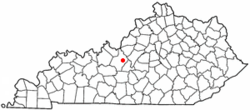
    "This is a place of rolling countryside, cattle farms and cropland," Alford writes."That's why some eyebrows arched when the Obama administration penciled Hardin County into Appalachia." (Wikipedia map locates Elizabethtown in Hardin County; map below shows the ARC territory, which is not affected by the anti-drug jurisdiction's boundaries.)
    The Office of National Drug Control Policy said it added Hardin County at the request of U.S. Sen. Mitch McConnell of Kentucky, the Senate Republican leader. McConnell told the AP, "The argument I made is that, even though this is not technically an Appalachian county, it's not too far away from Appalachia and it's right here with two interstates going north and south and east and west, and clearly is a transit point" for drugs. Louisville and Bowling Green, metropolitanm areas north and south of Elizabethtown on Interstate 65, had already been added to the area. At the same time it added Hardin County, the drug office also added Brooke, Hancock, Marshall and Ohio counties in northern West Virginia.

    Some Central Appalachian political leaders say adding western counties to the list will make it harder for federal money to reach eastern counties that need it more. "Bringing on more counties only makes our situation less hopeful," Harlan County Judge-Executive Joe Grieshop told Alford. (Read more)

    Wednesday, October 3, 2012

    Dairy farmers struggled through drought, now battle armyworms; will suffer without Farm Bill

    Dairy farmers will lose up to 10 percent of their monthly income from milk beginning in October because the Milk Income Loss Contract expired when the Farm Bill wasn't renewed on Sept. 30. MILC is a program that provides dairy farmers with payments when the price of producing milk is more than the price for which it's sold. (Oklahoma Farm Report photo)

    MILC payouts were cut to 34 percent, from 45 percent, when the Farm Bill expired, Melissa Miller of the Southeast Missourian in Cape Girardeau reports. High feed and gas prices have forced farmers to sell their least productive cows to slaughter, and some small farmers are considering leaving the business. Miller writes that the armyworm is adding to farmers' misery. The pest strips pasture grass, which often replaces expensive feed. Dairy Farmer John Schoen told Miller most farmers are likely losing $10,000 to $15,000 a month.

    "Dairy is one of the few commodities that will get hit immediately by this [Farm Bill expiration] because we're on a monthly schedule," Jefferson County Farm Bureau president Michael Kiechle told Ted Booker of the Watertown Daily Times in far upstate New York. "We probably won't get anything now until the crops go in the ground next spring."

    Commercial dairy farmers in Maine "depend on subsidies in the [Farm Bill] to help them get through tough times," reports Jay Field of Maine Public Broadcasting. They are selling milk for less than it costs to produce it because of high gas and feed prices. One farmer told Field he will spend $6,000 more on fuel this year, and is barely covering operating costs right now.

    Thursday, September 27, 2012

    Seven states with significant rural populations ask for No Child Left Behind waiver approval

    Coast Guard Lt. Tom Pauser visits
    a rural Alaskan classroom to give
    safety training. (Coast Guard photo)
    So far, the U.S. Department of Education has granted No Child Left Behind Act waivers to 33 states plus the District of Columbia. Seven additional states met the Sept. 6 deadline for the third round of exemptions from the law. Five of those states -- Alaska, Maine, New Hampshire, North Dakota  and West Virginia -- are considered rural by the National Center for Education Statistics. Alabama and Hawaii have significant rural populations. This means, writes Education Week reporter Michele McNeil, that these applications ensure that the department's "experiment in awarding flexibility in exchange for certain education-improvement promises will play out in a diverse set of states with vastly different geographies and student populations."  This brings to 44 the number of states that have asked for flexibility in administering the law.

    McNeil reports that those states hoping to win waiver approval have to agree to revamp "their teacher-evaluation systems, have to adopt college- and career-ready standards and tie state tests to them, and adopt a differentiated accountability system that focuses on 15 percent of their most troubled schools. In return, states will no longer have to face the 2014 deadline for bringing all students to proficiency in math and reading, and their schools will no longer face NCLB-law sanctions such as providing school choice. District officials also will have more freedom to move around federal Title I money for disadvantaged students." (Read more)

    Monday, September 24, 2012

    Wind energy installations could stop if federal tax break isn't renewed

    Installations of new wind turbines could stop without renewal of an energy-production tax credit that expires at the end of the year, according to the American Wind Energy Association. Some wind-energy installations have already shut down, and there will likely be a rush to complete projects before the cut-off date, Matthew Wald of The New York Times reports.

    The importance of subsidies is highlighted in the Shepherds Flat wind farm in north-central Oregon (Department of Energy photo), which officially opened Saturday. The $1.9 billion project was financed with a $1.3 billion federal loan. Wind was one of the largest recipients of federal subsidies for electricity production in 2007, receiving much more than coal or  natural gas.

    Extension of the wind subsidy is unclear. Congress did not act to extend it before it recessed for the election season, and it's unlikely it will be discussed during the lame-duck session after the election. (Read more)

    Thursday, September 20, 2012

    What will really happen if there's no Farm Bill by Sept. 30? Not that much

    Congress is not going to pass a new Farm Bill before its election recess, which is set to begin next week. That means that 2008 funding for programs including the Supplemental Nutrition Assistance Program (generally known as food stamps) and direct payments to farmers will technically expire on Sept. 30. In theory, some "fairly scary things" will happen, reports Julie Rovner of National Public Radio. But in reality, "almost none of the changes would happen right after Sept. 30," at which time, Congress could have passed a new bill.

    Technically, federal price supports will revert back to 1949 levels without a new bill or an extension of the old one. That would mean the government would "pay huge bonuses" for certain crops, but not for others, because some commodities were added after to the list after 1949. It also would raise prices for commodities such as milk and soybeans. But, Montana State University economics professor Vincent Smith told Rovner the real reason Farm Bill supporters are pushing for a new bill has more to do with budget politics than the actual mechanics of it.

    "They want to have a Farm Bill now that locks Congress and the taxpayer into obligations based on either the Senate or the House bill," Smith told NPR. "What they're concerned about is that, if serious deficit-reduction talks take place, then a lot more money than was initially identified to come out of the farm bill by the 'supercommittee' a year and a bit ago will have to come out of the Farm Bill."

    "We actually have until about Jan. 1 before we run into a lot of administrative problems with this bill reverting to some very high prices," Mary Kay Thatcher, director of congressional affairs for the American Farm Bureau Federation, told Rovner. The 2008 measure covers all of this year's crops, even if they haven't been harvested yet. The first crop that would be affected by new price supports would be winter wheat, which is harvested in the Spring, Rover reports. (Read more)

    Wednesday, September 19, 2012

    Tough vote for rural members? House won't vote on postal reform before November elections

    An overhaul of the U.S. Postal Service will not even be discussed in the U.S. House before the November elections, Bernie Becker of The Hill reports. After the Senate passed a bill, House Republicans suggested they would start moving their own version during the summer. They now say one reason for the delay is that it could be a tough vote for members from rural areas, where the majority of suggested post office closings and changes would happen, Bcker reports.

    Lawmakers working on postal issues are trying to "lay the groundwork to ensure at least something gets done on the issue" during the post-election lame-duck session that will already be packed with "pressing fiscal issues," Becker reports. Republican Rep. Darrell Issa of California, chairman of the House Oversight Committee, who introduced the postal reform bill, said he believes the Republican leadership will support bringing the bill to the House floor after the election. (Read more)

    Tuesday, September 18, 2012

    In redefinining 'rural,' Senate version of Farm Bill could cut funds for neediest rural areas

    The Senate version of the Farm Bill would streamline definitions of “rural” but one result "could be less funding for the very areas that most meet what many Americans would consider the targeted recipients for these programs," Farm Bill policy expert Aleta Botts writes for The Rural Blog and the Daily Yonder.

    USDA Rural Development programs use varying definitions of “rural area,” Botts explains. “Rural water programs are allowed to go only to cities, towns, or unincorporated areas of fewer than 10,000 people. The limit for community facility programs (which pay for libraries, health centers, and many other community brick-and-mortar investments) is 20,000, while the limit for business programs is 50,000.” The Senate bill would use a 50,000 limit for all programs.

    That could hurt rural areas with small populations, Botts writes. She notes testimony by the National Rural Water Association that more than 400 communities will have to wait until at least next year for water-project money. “This is an oversubscribed program and has been for years,” she writes.  “If it is oversubscribed now with its limit at 10,000 people, what will result when the population limit is raised to 50,000?”

    The bill sets aside half of one rural water program’s funds to communities with fewer than 3,000 people and gives a “priority” to areas with fewer than 5,500. “But more than 80 percent of the funding already goes to areas of 5,000 or fewer, according to the National Rural Water Association testimony, so this language may actually mean little in practice,” Botts writes. For her full article, click here.

    Monday, September 17, 2012

    Democrats trying to use GOP Farm Bill inaction to their political advantage with rural voters

    Some Democrats are trying to turn the failure of the Republican-controlled House to pass a Farm Bill into an opportunity to pick up rural votes in November. Analysts are saying it could influence races in Indiana, Wisconsin and North Dakota, where agriculture interests are very influential, Alan Bjerga of Bloomberg News reports. And while it might affect some House races, Bierga writes, it's unlikely that it will help Democrats wrest control of the House.

    Iowa State University political science professor Steffen Schmidt told Bjerga that Farm Bill inaction could weaken Republican Senate efforts in rural, conservative states such as North Dakota and Montana, which likely won't be won by Democrats in the presidential election but could be won by Democrats in congressional races. Not passing a Farm Bill has “become a very salient issue in a lot of key battleground races," Democratic Senatorial Campaign Committee communications director Matt Canter told Bjerga. Canter added that Senate candidates, particularly in rural states, can localize their races around issues such as agriculture. In the Senate, Republicans only need to add three seats to take the majority. (Read more)

    Thursday, September 13, 2012

    Petition would force vote on Farm Bill in full House

    House Republican leaders have refused to allow a vote on a new Farm Bill until after the November election, even though the Agriculture Committee approved one in July. Rep. Bruce Braley, D-Iowa, has initiated a discharge petition, which can bring a bill to the floor if it has 218 signatures, a majority of the House.

    But the bill has to be formally reported to the floor before the discharge can be launched, and Speaker John Boehner has kept it from being reported, even though House rules require a "prompt" report, Bob Meyer of Brownfield Agricultural News reports.  "Committee Chairman Rep. Frank Lucas, R-Okla., did not report the bill to the House clerk until Monday," reports Michael Catalini of the National Journal, citing an unnamed Democratic aide. "Discharge petitions can only be introduced either after bills have been reported out of committee, or after 30 legislative days go by."

    Braley said in a statement yesterday, "Speaker Boehner is using all the moves in the procedural playbook . . . personally overruling a bipartisan and geographically diverse coalition that I’m helping lead, 50 different farm groups, and what I believe to be a bipartisan majority of the House. If he put this bill on the floor, it would pass, and we’d be one step closer to bringing stability and relief to American farmers and consumers." Braley said that of the last five farm bills, the longest delay between a vote to report and the actual reporting was 20 days. The vote was 66 days ago. (Read more)

    Wednesday, September 12, 2012

    Mayors along Mississippi want feds to pay attention to the river's issues

    More than 20 mayors from cities and towns along the length of the Mississippi River, from Minnesota to Louisiana, will gather in St. Louis Thursday and Friday to discuss a plan to bring national attention to problems with the river at a time when budgets are tight and money to address the issues is scarce, reports Bill Lambrecht of the St. Louis Post-Dispatch.

    Many river communities suffered a "one-two punch" recently as drought dried fields and hindered river traffic, then Hurricane Isaac flooded those fields, drowning much of the livestock of small-scale producers. But local officials were concerned about lack of attention to a laundry list of river issues, including crumbling ports and aging locks and dams, long before this summer, Lambrecht reports.

    About 40 mayors have signed onto a new initiative to argue the river's case collectively to Congress, the Army Corps of Engineers, the U.S. Department of Agriculture and the Environmental Protection Agency. The mayors will first pressure Congress to pass the Farm Bill, which contains drought and disaster relief. Then, they intent to ask for more robust flood insurance legislation. Lambrecht reports they plan to present a detailed platform of the river's needs early next year. (Read more)

    Friday, September 7, 2012

    Sen. Grassley, Farm Bill authority, says Congress won't have time to draft new bill this session

    There is not enough time to fix the current Farm Bill that expires at the end of this month, Sen. Charles Grassley, an authority on the topic, said this week as Congress returned after the August recess. Grassley said Congress will likely include a one-year extension of the 2008 Farm Bill in a continuing resolution that lawmakers have to consider later this month.

    Grassley said there was no sense of "farm revolt" in response to Congress' inability to pass a new Farm Bill, and that a one-year extension of the existing Farm Bill "should prevent any backlash from developing," reports DTN/The Progressive Farmer. He also said Congress will likely pass a drought disaster aid bill. Even though an extension will likely be implemented, it doesn't mean Congress will stop work on a new Farm Bill, DTN reports. It could act any time during the lame-duck session after the November elections, or in early 2013.

    DTN is available by subscription only, but free trials can be accessed here.

    Wednesday, September 5, 2012

    Republican and Democratic platforms differ on gun control, other criminal justice issues

    The Democratic National Convention adopted the party platform yesterday, suggesting additional gun control by a call for "an honest, open national conversation about firearms." The Republican platform opposes any new gun control.

    Ted Gest of The Crime Report reports the Democratic platform proposes new funding to "help keep cops on the street and support our police, firefighters, and emergency medical technicians," something they say Republicans and Mitt Romney "have opposed and even ridiculed."

    The parties agree on prisoner rehabilitation, with Democrats touting the Obama administration's the creation of the Federal Interagency Reentry Council in 2011 to address prisoner re-entry. The party also "made a point of backing work by government at all levels to 'combat and prevent drug crime and drug and alcohol abuse,'" Gest reports. It's worth noting that party nominees do not formally embrace these platforms. (Read more)