Showing posts with label drugs. Show all posts

Monday, October 8, 2012

Feds pencil another non-Appalachian county into their efforts to fight drug traffic in the region

When the Appalachian Regional Commission was created in 1965, it included for political and other reasons many counties that were not part of the poor, mountainous region but resembled it economically. Since then, Congress has added several such counties to the officially recognized region to make them eligible for ARC help. Some truly Appalachian counties grumbled that the pool of money was being diluted, and they are doing likewise now that the Obama administration has placed Kentucky's central crossroads town in the Appalachia High Intensity Drug Trafficking Area, "a jurisdiction set up to fight the drug trade in the mountains," reports Roger Alford of The Associated Press, who once reported for the wire service from Eastern Kentucky.
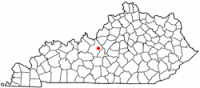
"This is a place of rolling countryside, cattle farms and cropland," Alford writes."That's why some eyebrows arched when the Obama administration penciled Hardin County into Appalachia." (Wikipedia map locates Elizabethtown in Hardin County; map below shows the ARC territory, which is not affected by the anti-drug jurisdiction's boundaries.)
The Office of National Drug Control Policy said it added Hardin County at the request of U.S. Sen. Mitch McConnell of Kentucky, the Senate Republican leader. McConnell told the AP, "The argument I made is that, even though this is not technically an Appalachian county, it's not too far away from Appalachia and it's right here with two interstates going north and south and east and west, and clearly is a transit point" for drugs. Louisville and Bowling Green, metropolitanm areas north and south of Elizabethtown on Interstate 65, had already been added to the area. At the same time it added Hardin County, the drug office also added Brooke, Hancock, Marshall and Ohio counties in northern West Virginia.

Some Central Appalachian political leaders say adding western counties to the list will make it harder for federal money to reach eastern counties that need it more. "Bringing on more counties only makes our situation less hopeful," Harlan County Judge-Executive Joe Grieshop told Alford. (Read more)
Thursday, October 4, 2012

Access and cultural issues make alcohol, prescription pills rural drugs of choice

"Alcohol and non-heroin opiates are the drugs of choice in rural populations ... while heroin and cocaine top the list in urban areas, according to a new report from the Substance Abuse and Mental Health Services Administration," reports Aaron Levin of Psychiatric News. Methamphetamine usage was about the same in rural and urban areas, "despite the common assumption that meth is largely a rural problem," Levin writes. Rural people also use slightly more marijuana.

Higher use of alcohol and non-heroin opiates, or prescription painkillers, in rural areas may reflect access issues, SAMHSA's Center for Substance Abuse Treatment director H. Wesley Clark said. "Illegal drugs may be harder to conceal in the pipeline to rural areas, or legal substances may be less stigmatized." Rural people steal about 67 percent of the prescription pills they abuse from friends or family. The rest come from doctors, University of New Mexico psychiatry professor Snehal Bhatt told Levin.

About 67 percent of rural users started using before 18, compared to 53 percent of urban users. This probably leads to higher rates of rural youth binge drinking and driving drunk, according to a University of Southern Maine study. "Rural youth, their families and peers are less likely to disapprove of youth drinking than urban youth, risk factors that are associated with greater likelihood of adolescent alcohol use," researcher John Gale wrote in the study. (Read more)

Friday, September 7, 2012

Western N.C. county hopes its prescription-drug task force will address high rate of overdoses

One hundred people die every day from drug overdoses, according to the Centers for Disease Control, and almost three out of four of those are due to prescription drugs, according to the National Institutes of Health. Prescription drug abuse is an epidemic that began in Appalachia, and as one western North Carolina county deals with the issue,  a local newspaper is putting it on the public agenda.

Wikipedia map
Yancey County (Wikipedia map) has "one of the worst rates" of unintentional overdoses of prescription drugs in the U.S., said Yancey Mitchell Prescription Drug Abuse Task Force chair Mechelle Akers. The task force presented information to the Yancey County Commission this week, reports Jonathan Austin of the Yancey County News. In 2008 to 2010, the county had 13 overdose deaths. Akers, who is a pharmacist, said the numbers exceed North Carolina and Yancey's neighboring counties' overall rates.

Seventy percent of those who overdose from prescription drugs get them from family members or friends, Akers said. The "flood of painkillers has swamped law enforcement," Austin reports. There were 102 drug arrests in 2002, and 800 last year. Angel Light Counseling addiction specialist John Williams told Austin: "Addiction to drugs is the largest problem our society faces, and legally prescribed medication constitute a large percentage of this problem. With the economy the way it is, people are more depressed and worried. They seek some kind of relief. They turn to something that alters their consciousness to reduce their worry." (Read more)

Wednesday, September 5, 2012

Republican and Democratic platforms differ on gun control, other criminal justice issues

The Democratic National Convention adopted the party platform yesterday, suggesting additional gun control by a call for "an honest, open national conversation about firearms." The Republican platform opposes any new gun control.

Ted Gest of The Crime Report reports the Democratic platform proposes new funding to "help keep cops on the street and support our police, firefighters, and emergency medical technicians," something they say Republicans and Mitt Romney "have opposed and even ridiculed."

The parties agree on prisoner rehabilitation, with Democrats touting the Obama administration's the creation of the Federal Interagency Reentry Council in 2011 to address prisoner re-entry. The party also "made a point of backing work by government at all levels to 'combat and prevent drug crime and drug and alcohol abuse,'" Gest reports. It's worth noting that party nominees do not formally embrace these platforms. (Read more)

Friday, August 24, 2012

Ky. agriculture commissioner, Sen. Rand Paul start push to legalize hemp as an industrial crop

Kentucky's agriculture commissioner and one of its U.S. senators launched a push yesterday for the legalization of hemp as a fiber and oil product, a move that would require changes in state and federal laws — changes opposed by police who fight marijuana.

Commissioner James Comer and Sen. Rand Paul, both Republicans, held a press conference with Democratic state Sen. Joey Pendleton of Hopkinsville before the annual state-fair breakfast of the Kentucky Farm Bureau, which Comer said is now neutral on the idea after opposing it. Paul (speaking in Courier-Journal photo by Aaron Borton) said every other industrialized country allows the production of industrial hemp, and he wore a hemp shirt that he said he ordered online from Canada. Comer said that if Kentucky could be a pilot state for legalization, it would be a long-term advantage. The state was once a big hemp producer.

"The efforts by Comer and Paul face an uphill battle in both legislatures," writes Greg Hall, farm reporter for The Courier-Journal. "U.S. Rep. John Yarmuth, D-[Louisville], said it’s unlikely that an industrial hemp bill would pass in a Congress that hasn’t been eager to deal with other weighty issues. . . . Both of the agriculture committee chairmen in the Kentucky legislature said Thursday that they are willing to discuss the issue — but stopped short of saying they’d allow a vote." (Read more)

Wednesday, August 22, 2012

Marijuana's resistance to drought makes it an easier target for police this year

The drought is making marijuana crops a lot easier to spot, reports The Courier-Journal of Louisville. Indiana State Police got an early start to the annual marijuana eradication season this week, Sgt. Jerry Goodin told reporter Charlie White that the browning of drought-stricken corn makes the resilient green pot plants interspersed between them “stick out like a sore thumb.” (C-J photo by White)

In Kentucky, State Police Lt. Brent Roper said his agency started cutting outdoor marijuana plants last month. The drought hasn't affected the number of crops they've seized this year, he said, but "It does help when the corn starts browning," which is happening even in some of the state's moderate-drought areas. Roper's agency destroyed more than 120,000 plants through the end of July this year, compared with about 91,000 in the same period last year. Indiana and Kentucky continue to be among the top states for outdoor pot seizures, according to federal statistics. (Read more)

Monday, August 13, 2012

Week's start on drought news: Wells dry up, crop insurance helps, pot shrivels, some areas gain

A cornfield in Bloomsdale, Mo., where wells
wells are going dry. (St. Louis Post-Dispatch)
"Everyone, most everything, needs water," Rick Montgomery of The Kansas City Star wrote Sunday in the first installement of his three-part series, "Chasing the Drought." "We just can’t always expect it to be there, not as the world’s population grows and its moisture content stays the same."

So begins the week's reporting on what is fast becoming the topic none of us can escape.

“This year’s drought is a great opportunity to look at the plans in place and better prepare for the next drought,” Michael Hayes, executive director of the National Drought Mitigation Center at the University of Nebraska told Montgomery. The reporter has traveled through seven Midwest states and "met with farmers, beef producers, worried weather experts, park managers and policy wonks" to find out how each would try to avert some of this pain down the road, if it can be averted. (More here)

Abandoned Main Street in post-irrigation
Happy, Texas (Scott Tong photo)
How much impact? Today, 36 states are projecting water shortages next year. For regulators, it's hard to limit the use of the essential resources, especially in states like Texas, where groundwater is part of your private property. American Public Radio's Marketplace visited Happy, Tex., a small town in the Panhandle that knows what it's like to run out of water. (Read more)

You can add residential water wells to the list of casualties claimed by the Drought of 2012, reports the St. Louis Post-Dispatch. "For months, farmers have been forced to drill deeper wells to water parched crops and feed livestock. But in recent weeks, homeowners across the state have reported that they can't perform basic tasks such as doing laundry or washing dishes, let alone even think about watering their flower beds. It's a difficult problem to quantify, because most private wells go unmonitored."

While the government has slashed its estimate of the soybean yield, made only a month ago, to the lowest level since 2003 and its estimate of the corn yield to the lowest level since 1995, Agriculture Secretary Tom Vilsack says 85 percent of farmers are covered by crop insurance, The New York Times reports.

It's safe to bet that these farmers aren't covered: Lauren Pack of the Dayton Daily News and John Caniglia of The Cleveland Plain Dealer report that the state's marijuana crop has suffered horribly in the drought. "The potent plant that thrives in fields and wooded acres across Ohio has suffered through an unusually brutal summer," he writes. In many places, plants are a fraction of the 4- or 5-foot height that is normal for this point of the growing season. Give it time; it's a weed, remember? (Photo from KEVO-TV, Brownsville, Tex., with story by Tina McGarry)

Of course, the drought is good news for farmers in places where it is absent, because it has driven up prices, but those effects can be broader and indirect, in areas where grains are not major crops. In western North Carolina, award-winning editor Jonathan Austin of the Yancey County News found a way to make the national story local in a region that is getting plenty of rain: "Some area farmers may want to consider taking a chance by buying some of the cattle flooding the market in the Midwest. The impact of the drought on food prices could also lead more residents to begin shopping locally," according to North Carolina State University's Arnold Oltman, a professor of agriculture and resource economy. Austin also reports the region's "availability of water may prove to be an economic boon to microfarmers, beef growers and others who look to the land for at least some of their income." (Read more)

Tuesday, July 31, 2012

State and tribal courts report success in joint effort to help Native Americans get sober

A collaboration of state and trial courts in northern Minnesota to combat drug and alcohol addiction among Native Americans is reporting success, according to The Crime Report. Judges Korey Wahwassuck of the Leech Lake Band of Ojibwe Tribal Court and John Smith of Cass County Court addressed the National Criminal Justice Association National Forum about the partnership, known as Wellness Court, last week.

The Leech Lake court is working with courts in Cass and Itasca counties on the program, a variation on drug courts that exist in many counties across the U.S. in which participants are helped through a series of programs to curb their addiction. (Minnesota Indian Affairs Council map: Leech Lake Reservation and emblem)

The judges presented two success stories. One involved a mother of four who said she is now "an inspiration to her kids," and a father who had previously been through a dozen treatment programs, none of which worked except Wellness Court, which has kept him sober for 18 months. Wahwassuck said there's been a major "climate change" in his tribe. Members now talk about sobriety and recovery more than about heavy drinking. (Read more)

Tuesday, July 17, 2012

As prescription drug abuse worsens, America's war on drugs is less a foreign fight than a domestic one

Policeman in Tegulcigalpa, Honduras
(NYT photo by Tomas Munita)
Surprising hardly anyone in rural America, the rest of the country is waking up to the fact that the drugs most likely to land us in emergency rooms cannot be interdicted at a border. Studies show that prescription painkillers, and stimulants to a lesser extent, are the nation’s biggest drug problem.

Of the 36,450 overdose deaths in the United States in 2008, Damien Cave and Michael S. Schmidt of The New York Times report, 20,044 involved a prescription drug, more than all illegal drugs combined. And while cocaine and heroin have been concentrated in big cities, prescription drug abuse is everywhere. “Today there is drug use in every county in Ohio, and the problem is worse in rural areas,” said Mike DeWine, the attorney general of Ohio.

So far, government and the health care industry response has been slow, Cave and Schmidt write. But momentum for a broader change in domestic drug policy appears to be building. Drug Enforcement Agency officials say they have recently created 37 “tactical diversion squads” focusing on prescription-drug investigations, with 26 more to be added over the next few year. The move has been prompted in part by the realization that drug interdiction in Mexico and Central America not only wasn't working but wasn't the problem, says Morris Panner, a former counternarcotics prosecutor in New York and at the American Embassy in Colombia, who is now an adviser at Harvard University’s Kennedy School of Government.

The Times reporters note that the decades-old priority shift would have immediate impact throughout Mexico and Central America: "With the drug wars in Mexico inflaming violence, some argue that the money now used for interdiction could be better spent building up the institutions — especially courts and prosecutors’ offices — that would lead to long-term stability in Mexico and elsewhere." (Read more)

Thursday, July 12, 2012

When OxyContin became harder to crush, heroin filled the painkiller void for many, study finds

In an effort to stem the tide of OxyContin addiction in the country's rural regions, its creator, Purdue Pharma, changed the formula to make the opioid pill harder to crush and abuse, but this has caused "an unexpected, and dangerous, shift to heroin," a new study concludes, reports Alex Crees of Fox News.

Researchers in the medical school at Washington University in St. Louis surveyed more than 2,500 patients from 150 drug treatment centers across the U.S. The number of people who reported OxyContin as their primarily abused drug dropped from 35.6 percent before the formula change to 12.8 percent afterward. But many are simply turning to heroin or other, stronger opioids. Researcher Theodore Cicero said heroin is similar to OxyContin and this is likely the biggest reason for turning to street drug. He said heroin is also cheap and readily available.

The study, published in New England Journal of Medicine, is preliminary and does not have exact percentages on how many people switch from OxyContin to heroin. (Read more)

Tuesday, June 12, 2012

Weekly and daily newspaper work together to give update about national story in their area

Large daily and small rural weekly newspapers don't often work together to write special reports, but when they do, the results can be well worth the effort. The Pueblo Chieftain and the weekly Johnstown Breeze collaborated on an update about the "Mortal Kombat" killing, in which Heather Trujillo, left, and her boyfriend were charged with the murder of Heather's seven-year-old sister, Zoe Garcia, by acting out moves from the video game.

When the story broke in 2007, it got national attention and was lauded as the example for why children shouldn't play violent video games. Steve Henson of The Chieftain and Matt Lubich of the Breeze report that the story is actually more complex, starting with the fact that Garcia's death had nothing to do with Mortal Kombat. It was more about Heather's violent boyfriend and her inability to stop his drunken rage that led to the beating death of Garcia.

The reporters write that the case was also about Heather's troubled upbringing, which included being born to a 13-year-old mother, at times raising some of her 10 younger siblings, many of whom had different fathers, and her struggles with drug and alcohol abuse. Henson and Lubich also report the story is about how the system sometimes fails those born into poverty with drug-addicted and neglectful parents. "To understand" this story, they write, "you need to come to terms with children having children, the numbing of logic brought on by reliance on bureaucracy, poverty, drug abuse and parental neglect." Heather is now 21 and is scheduled for release from the Colorado Department of Corrections Youthful Offender System in December.

Read part of Henson and Lubich's joint report here. The Breeze has the full story behind a pay wall, but it can be accessed for $1.